The Lead Magnet Formula That Attracts Real Buyers
Most creators waste their email list potential by sending campaigns without understanding what actually works. The Blueprint for Email List Profitability reveals how to segment subscribers by intent and dramatically increase open rates and profits.

The Blueprint For Email List Profitability
Your inbox contains money waiting to be collected. Most creators send campaigns into the void without knowing what works. The Blueprint for Email List Profitability changes that with a single shift. Stop guessing and start treating your list like the asset it is.
The Blueprint for Email List Profitability Starts With Permission Quality
You can’t build profit on a weak foundation. Every email address comes with a different level of intent. Someone who gives you their email for a 50% discount coupon wants something different than someone who downloads your guide on advanced conversion tactics. The difference shows up immediately in your open rates.
Free giveaway subscribers open about 12% of your emails. Lead magnet subscribers who chose a specific topic open 31%. Buyers who joined your list after a purchase open 48%. Those numbers aren’t small variations. They’re completely different businesses hiding inside the same list.
Segment at the point of entry. Create separate tags for how people joined. This takes three minutes to set up in any email platform. You’ll send different campaigns to each group based on what they already told you they want.
Most people dump everyone into one bucket. Then they send the same pitch to bargain hunters and serious buyers. Open rates tank. Revenue per subscriber stays under a dollar per month. The list becomes a chore instead of an income source.
Track where each subscriber came from in your system. Use that data every single time you write an email. A freebie seeker needs more education before any offer. A previous buyer just needs the next logical step.
Monetization Timing That Follows The Blueprint for Email List Profitability
You lose money by waiting too long to make offers. New subscribers expect to hear about your products. They joined because they have a problem. Your solution is why they’re paying attention right now.
Send your first offer in email three. Not email ten. Not after weeks of “building trust.” Trust comes from showing you understand their situation and have something that helps. Delaying the offer just trains people to ignore you.
Email one delivers what you promised. Email two tells a story about how someone solved the exact problem your subscriber has. Email three presents your paid solution with a clear explanation of what it does. This sequence converts at 3% to 7% depending on your market.
The opposite approach sends ten educational emails before any mention of a product. By email eleven, half your list stopped opening. You trained them that your emails contain no action items. Getting them to buy later becomes nearly impossible.
Early offers filter your list automatically. People who never plan to buy unsubscribe fast. People interested in solutions stick around. Your open rates actually improve because you’re left with engaged readers. Following The Blueprint for Email List Profitability means treating your list like a business channel from day one.
The Blueprint for Email List Profitability Requires Frequency Calibration
Sending once a month kills momentum. Your subscribers forget who you are. Each email becomes a cold introduction all over again. Open rates drop below 15% because you’re starting from zero every time.
Daily emails feel aggressive but they work. Lists mailed daily see 22% to 35% open rates after the first month. People get used to seeing your name. Your emails become part of their routine. Revenue per subscriber jumps to $3 to $8 monthly.
The key is making each email worth opening. One clear idea per email. One story or tip. One call to action. You’re not dumping information. You’re continuing a conversation that picks up where yesterday left off.
Three times weekly sits in the middle. It works when you can’t commit to daily content. You maintain presence without overwhelming your writing capacity. Revenue lands around $1.50 to $3 per subscriber monthly.
Test your frequency by doubling it for two weeks. Watch what happens to opens and unsubscribes. Most lists can handle more email than their owners think. The unsubscribes you get are people who weren’t going to buy anyway.
Pick a schedule and stick to it religiously. Consistency matters more than volume. Your list learns when to expect you. Breaking that pattern destroys the habit you’re building in their inbox behavior.
Offer Structure According to The Blueprint for Email List Profitability
Promoting one product forever caps your income. Each subscriber has a maximum spend ceiling for any single solution. Once they buy it, you have nothing left to sell them. Your list growth becomes your only revenue growth.
Build a product ladder instead. Your entry offer sits at $27 to $47. Mid-tier products land at $97 to $197. High-ticket solutions start at $497. Each solves a different level of the same core problem.
A subscriber buys your $37 email course. Two months later you offer your $147 workshop. Six months later you pitch your $997 coaching package. The same person spends $1,181 instead of $37. This multiplies list value by thirty times.
Affiliate offers fill gaps in your ladder. You don’t need to create everything yourself. Find products your audience needs that you don’t sell. Promote those at 40% to 50% commission. Treat them exactly like your own products in your email campaigns.
Map out your ladder before you write another email. Identify what you sell at each price point. If you have gaps, either create something or find an affiliate product. Knowing your full ladder shapes every promotion you send. You can reference higher offers even when promoting entry products.
Buyers move up the ladder faster than you expect. Someone who spends $47 will spend $497 within ninety days if you present the right offer. You just need to ask. Many creators never do because they assume people won’t spend more.
Engagement Metrics That Define The Blueprint for Email List Profitability
Counting total subscribers is meaningless. A list of 50,000 people who never open generates zero dollars. A list of 3,000 engaged readers generates $15,000 monthly. The size everyone brags about has nothing to do with money.
Track your click rate on sales emails. This number tells you how many people care enough to look at your offer. Anything above 4% means your list is healthy. Below 2% means you’re mailing the wrong people with the wrong message.
Revenue per subscriber per month is your real scorecard. Divide total email revenue by list size. Under $1 means you’re leaving serious money on the table. $3 to $5 is solid. Above $8 means you’ve figured this out.
Calculate these numbers every month. Write them down. Compare them to last month. This shows you whether your list is getting more valuable or dying slowly. Most people never check and wonder why email stops working.
Clean your list every six months. Remove people who haven’t opened in ninety days. This feels scary but it boosts every metric that matters. Your email platform costs less. Your deliverability improves. Your opens go up because you’re only counting real readers. Implementing strategies from The Blueprint for Email List Profitability means protecting engagement over vanity metrics.
Content Balance in The Blueprint for Email List Profitability
Pure selling turns your list cold. Every email asking for money creates fatigue. People tune out. Your words stop mattering because they know every message ends with a pitch.
Pure education leaves money on the table. You become a free resource that nobody pays. Subscribers love your content but never buy. Your list is large and broke.
The ratio that works is three value emails to one sales email. Monday you teach something useful. Tuesday you tell a relevant story. Wednesday you share a quick tip. Thursday you sell. This pattern keeps people reading while consistently making offers.
Value emails can still mention products. You teach a concept and mention your course covers the advanced version. You’re not hard selling. You’re making people aware that deeper solutions exist. This warms them up for Thursday’s direct pitch.
Your sales emails need to provide value too. Don’t just list features and ask for money. Tell them why this solution works. Share a case study. Explain the mechanism behind the results. Even your pitch emails should teach something.
Track which emails get the best response. Not just sales emails. Which teaching topics get high opens? Which stories generate replies? Double down on what your specific list responds to. Every audience is slightly different. Your content balance should reflect what your people actually engage with.
List Building Speed Following The Blueprint for Email List Profitability
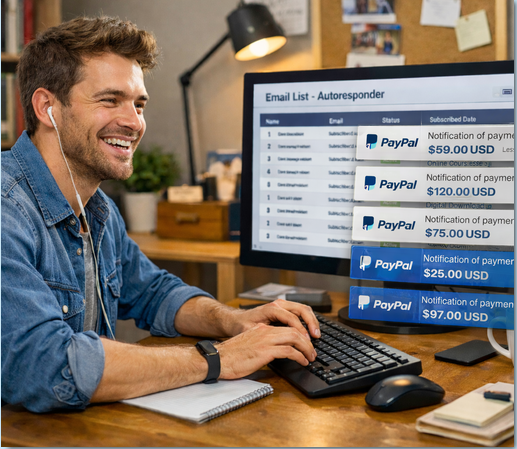
Growing your list needs intentional traffic sources. Waiting for organic discovery adds three subscribers monthly. You can’t build a profitable business on that pace. You need to actively push people toward your signup form.
Paid ads give you control over growth speed and customer acquisition cost (CAC). Spending daily on platforms like Facebook, Google Ads, or LinkedIn to add fifty subscribers weekly creates predictable momentum. Those subscribers cost you .40 each through cost-per-click (CPC) or cost-per-lead (CPL) campaigns.
If they generate monthly revenue per subscriber (RPMS), you break even in two weeks and profit thereafter. Track your CAC payback period closely—if subscribers cost more than their three-month lifetime value, adjust your targeting, ad creative, or landing page conversion rate to improve unit economics.
Guest appearances put you in front of established audiences. One podcast interview adds 200 subscribers. Five guest posts add 150 each. These cost time instead of money. The subscribers come in warm because someone they trust introduced you.
Content upgrades turn readers into subscribers. Someone reads your blog post. You offer a detailed checklist on the same topic. They trade their email for the download. This converts at 8% to 15% depending on how relevant your upgrade is.
Social media posts with clear calls to action drive consistent signups. Don’t just post content. Tell people exactly where to go to join your list. Add the link in your bio. Mention it in every third post. Make joining easy and obvious.
Set a weekly growth target. Decide how many new subscribers you need. Then pick tactics that get you there. Twenty new subscribers weekly means 1,040 yearly. At $3 monthly revenue each, that’s $37,440 in annual value added to your business. Growth compounds when you apply The Blueprint for Email List Profitability consistently.
Frequently Asked Questions
How long does it take to make money from an email list?
You can make your first sale within a week of starting. Send valuable content immediately and make your first offer in email three. Some lists convert on day one if the offer matches subscriber intent perfectly.
What size list do I need before I can sell products?
You can sell to a list of fifty people. Small engaged lists outperform large cold lists every time. Focus on getting the right subscribers rather than hitting arbitrary size goals.
How many emails should I send each week?
Three to seven emails weekly works for most businesses. Daily emails generate the highest revenue per subscriber. Test higher frequency than you’re comfortable with and watch your actual numbers.
What should I do about low open rates?
Clean your list by removing inactive subscribers first. Then improve your subject lines and sender consistency. Send more frequently to train people to expect your emails regularly.
Can I make money promoting only affiliate products?
Yes, many profitable lists run entirely on affiliate commissions. Choose products you genuinely recommend and promote them like your own. Your list doesn’t care who created the solution they need.
Start tracking your revenue per subscriber today and set a goal to double it in ninety days.